Showing posts with label Crossing the Line. Show all posts

Sunday, 14 October 2018

Tai Tam

Crossing the Line - part 26

The house at Tai Tam was an old colonial relic.  It was built as a small family house for the manager of the reservoir system which dominates that area of Hong Kong Island – a series of dam walls, reservoirs and catchment channels which provided water for the island before the population explosion after the Second World War.  The house was beautifully situated by the sea with its own small shingle beach.  On the other sides it was surrounded by semi-jungle on steep banks which led up from the shoreline towards the main road to Stanley.

By the 1980s it was well past its former colonial glory and the Hong Kong Government offered it to Jackie on a peppercorn rent, as a First Stage House for heroin addicts.

Downstairs there was a lounge which acted as our meeting room, a dining room, small kitchen, and a tiny office.  Upstairs, all the internal doors had been removed along with some of the stud walls to cram in as many bunk beds as possible forming a dormitory.  It was here that all the men at Tai Tam slept, recent ex-addicts and helpers alike.  Each of us had a top or bottom bunk bed, a small cupboard for clothes, and fan to keep us cool at night.  There was no air-conditioning, except in the office downstairs (and that was rarely used) and we slept with the windows open every night – even in winter!

There were also some outbuildings, which provided a small dormitory for our female helpers, along with a shower & toilet block and our ‘new boy room’.   This was where new brothers spent their first 10 days with us, withdrawing from heroin, methadone, opium, and whatever else they were addicted to.

When I arrived from Walled City it was late in the evening and everyone was already asleep apart from the single figure on night duty, sat at the top of the stairs.  I was told to leave anything valuable in the office and shown to the first empty bed upstairs to get some sleep.  I remember lying there thinking that I was sleeping in a room with around 15 ex-triads who had probably committed more violent crimes that I could imagine, but I was so tired that I soon went to sleep anyway.

Next morning the daily routine at Tai Tam started early.  Wake up was at 6:45am each day and everyone gathered in the lounge by 7:30 for Quiet Time – an hour for individual prayer and Bible study.  The beginning of this Quiet Time was anything but quiet though, beginning with 10 minutes praying out loud in tongues – the prayer language which everyone there had received.  It was a strangely harmonious cacophony of sounds as we all prayed out loud at the same time, but not unpleasant.  In time I learnt to value this as a time when I abandoned all my own thoughts and agendas, learning to turn myself over to God’s agenda for the day.  For me it became a kind of corporate meditation which enabled me to attune myself to God for the day ahead.  I don’t think I was alone in that.  After about ten minutes, the audible gaggle of prayer would gradually fade out and there would be quiet as we read out Bibles, prayed for our families and each other, and listened for anything which God might want to say to each of us.

Then it was breakfast.  It would be fair to say that this never became my favourite meal of the day.  Overall, I loved the food there.  We lived as any Chinese family did.  Fresh food for the day was bought cheaply from the open market in Chai Wan early every morning and we ate rice three times a day.  Lunch and dinner were fine with freshly boiled rice and a variety of meat & vegetable dishes to tuck into.  But breakfast was usually congee which I never became accustomed to.  For those who don’t know, congee is yesterday’s left over rice left in a slow cooker overnight until it turns into a kind of glutinous white soup.  There would be a small amount of finely chopped meat (a little like spam) sprinkled onto it and a super-hot chilli sauce available for the brave to take the taste away, but I hated it!  Occasionally, if there wasn’t enough left over rice from the day before, we would get fried noodles instead and these were red letter days in my book to be enjoyed to the full!

After breakfast, there would be some free time to chat and ‘drink tea’ (yam-cha) before work at 9:30 which consisted of household chores, painting & decorating, general maintenance, and keeping the grounds around the house clean and tidy.  For many of our brothers, this was the first ‘work’ they had done in years and was not universally popular.  For most addicts in the Triads, work used to be dealing or transporting drugs, beating up your opposition, or standing guard at the entrance to some illicit premises.  Picking up a paint brush, a rake or a vacuum cleaner was a whole new experience.

Then there was lunch which I always enjoyed.  That is, I always enjoyed it once I knew how to recognise the dishes I liked and the dishes I didn’t.  There was always a whole fish or two which was good as long as you managed to avoid the honour of eating the eyes or the challenge of eating the head!  Things I was less keen on included deep fried chicken feet which were both cheap and plentiful; cow’s stomach which was so rubbery that it often had to be swallowed whole; and cubes of congealed blood, which (even though I love black pudding in England) never quite managed to win me over.  Alongside these delicacies however, there was always food I loved.  Prawns and spring onions, beef or pork in oyster sauce, pak choy and nuts were just a few.

I quickly learned the art of eating quickly with chopsticks.  While in polite company you leave your rice bowl on the table and delicately lift the chopsticks to your mouth, in a family setting you pick up your bowl and put it to your mouth to shovel in the rice at speed!  Essential knowledge if you didn’t want the food to disappear in front of you.

The afternoon would be spent getting lots of fresh air and exercise.  In the cooler months, that meant walking the trails around the reservoirs, up into the mountains.  In the summer, we would swim each day from our little beach or go kayaking in the inlet.

After our evening meal, we would meet for worship and ministry.  For an hour or so each evening, we would sing songs of worship, share something from the Bible, and pray & minister to each other with gentle words of prophecy, healing and care.  These were often wonderful times with songs being sung with heart and soul, God tangibly present and tears of joy from hardened men whose hearts were being melted by the love of God.

Then after some more free time for showers, yam-cha and relaxing, we would all gather for brief Night Prayers in the dormitory before lights out and sleep at 9:45pm.

All of this sounds idyllic, and many aspects of being at Tai Tam were, but that is only half the story. 

The other side of our day to day life was extremely challenging.  Anyone who has lived in close community with others will know just how challenging that can be.  Different people, with different norms, different priorities, different likes and dislikes, different cultures and assumptions can be a powder keg even among people who choose to live together in community.  At Tai Tam we were a community of very recent ex-heroin addicts, triad members, older brothers and western helpers.  In one sense, helping them physically withdraw from heroin was the easy part.  It was learning to live a new life together which was the real challenge.

Many had been on drugs since they were 10 or 11 years old.  They had never experienced adolescence.  Now, free from a drug induced haze for the first time, we would see and experience middle aged men going through the tantrums of adolescence for the first time, having to come to terms with raw emotions and how to live with them.

Almost all of our brothers had spent time in prison and many of them had bounced in and out of prison for years.  They were skilled in the tools of manipulation to get their way from those in authority.

When we were out walking, we had to be vigilant for what was being picked up from the pathways. In coming to a First Stage House, it wasn’t just heroin which our brothers were expected to give up.  It was everything addictive, including alcohol, cigarettes, and coffee.  This was going ‘cold turkey’ on a grand scale and while the physical withdrawal through prayer was often miraculous, old habits die hard. Scanning the public pathways for discarded half smoked cigarettes, or cans of beer with a little left in the bottom were common place for our eagle-eyed brothers.  If they found something, it wasn’t the quantity which was important, it was the temptation to stray from the new life they were trying to commit to, and temptation always starts small.  If we give into it, it then grows and grows until even the occasional shot of heroin would be ok, wouldn’t it?

Then there was trust.  Sleeping as we did, alongside the brothers required trust.  Almost all had a violent past and some would have killed for their Triad ‘di-loh’ (Big Brother).  If a confrontation had occurred during the day with a particular brother, we knew that we would be sleeping in the same room as them that night. There were a number of occasions when I faced aggression and threats during my time there after having to challenge a brother about his behaviour or attitude.  We all had to trust that this would not lead to revenge in the small hours of the night.  Ironically, living so closely together in community actually helped in this.  It begged the question among the brothers, why would the helpers make themselves so vulnerable?  The only answer was because we loved and cared for them with the love of God who was even willing to go to the cross for us all.  That love kept us safe, but it didn’t eliminate the stress in difficult times.

In the office we had a Garfield postcard pinned up on the noticeboard.  It read “One day I will look back on all this and laugh!” At times we all drew inspiration from that postcard.  Each helper got one day off (24 hours) each week with an overnight stay back at Hang Fook Camp if we wanted it. We also attended the weekly helpers meeting each Thursday morning and went to the Church service every other Sunday, but apart from that we were there at Tai Tam 24/7.  It was very demanding and led most helpers to conclude that a month in a first stage house is like a year anywhere else!

And all that fails to mention the other core business of a First Stage House – helping our new brothers withdraw from heroin in the first place.  Jackie Pullinger was famous all over the Christian world for praying addicts off heroin without the kind of withdrawal pains and sickness which normally accompany going ‘cold turkey’.  As her ministry grew, this part of the ministry became the role of the First Stage Houses.  We would get a new brother almost every week, and for 10 days someone would be with them, praying with them, 24 hours a day, in four hour shifts.  The ‘someone’ would be a Western or Chinese Helper, or one of the brothers who was ready to move on to Hang Fook Camp.

This was the part of being in a First Stage House which terrified me.  I had visions of starting my first 4 hour shift with our new brother happy and pain free, only to find that by half way through he was writhing around in agony!  After all, I had never done this before.  I didn’t know how.  Why would God answer my prayers?  I was no expert.

It was on my second day at Tai Tam that I had to face my fear.  I went to the new brother room to start my 4 hour shift.  The new brother I was going to spend the next four hours with was the same person we had brought back from Walled City when I arrived.  He spoke very little English and I spoke very little Cantonese.  I tried not to look too nervous. He was in good spirits, 48 hours into his withdrawal.  For the next 4 hours, I sat with him while he slept and prayed with him every 15 minutes when he was awake.  I walked with him around the house and garden when he was bored and he showed me how to make Chinese tea.  Despite all my misgivings, he didn’t deteriorate into a sweaty, clammy, gibbering wreck and I discovered something vitally important. 

It wasn’t all about me.

My fears were all about me.  I was frightened that my prayers wouldn’t be good enough; that my faith wasn’t strong enough; that I wasn’t up the task before me.  It was all me, me, me! 

What I had failed to realise was that it was not about me at all.  As I joined this rota of prayer, I became part of something much bigger than me.  I was being swept up into a ministry that had been blessed by God over many years, as was the new brother I was praying with.  As my 4 hours drew to a close, I remembered his words when we left Walled City about why this time would be different: “Before, no Jesus. This time, Jesus.”  Together we were both experiencing the love and grace of God at work – a grace which flows in spite of our own shortcomings because they are God’s riches poured out freely upon us and they are nothing we can earn or deserve.

It wasn’t about me – it was about him and God.

During my time at Tai Tam, I had to remind myself that we were witnessing a miracle almost every day in praying for addicts as they got clean.  Not everyone came off without symptoms of withdrawal.   Generally, most new brothers (around 8/10) did have a little discomfort coming off their drugs, but nothing like the aches, pangs and cravings which they had experienced before, when they had tried to do it on their own.  1 in 10 suffered nothing at all, bouncing with energy and eating normally, and 1 in 10 did go through the pangs of withdrawal.  I never came to any conclusions about why that was, although it did remind us of what we could expect to experience without the blessings of answered prayer!
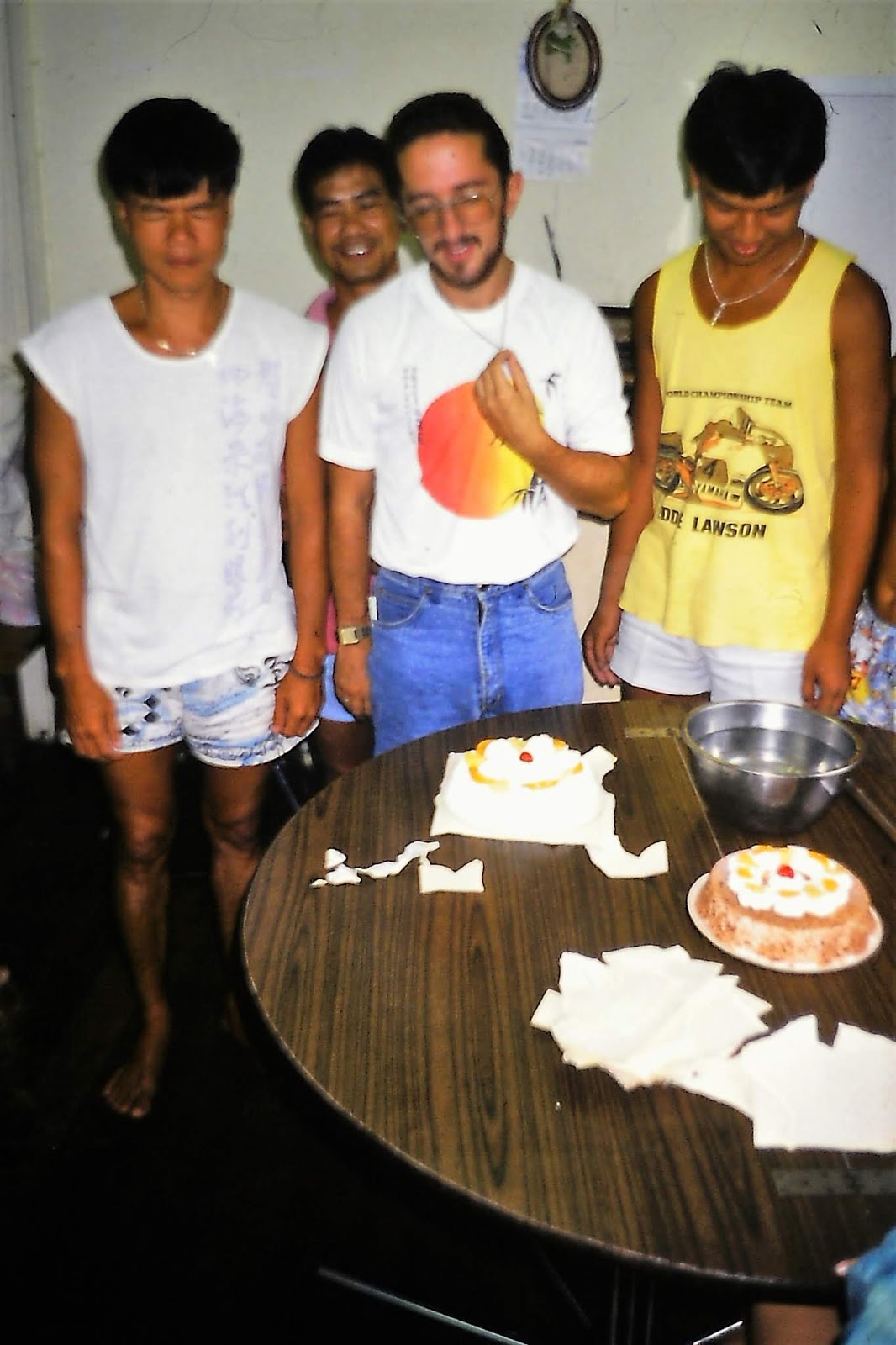
After 7-10 days as a new brother, they were welcomed fully into the community at Tai Tam with a celebration.  They were now washed clean from the drugs which used to enslave their lives.  We would share celebration cake together and he would be given a bunk bed in the main house.  We would sing songs of praise and the real work begun - the learning of a new pattern of life which would not lead them back into slavery again.

Not everyone made it through and on to Hang Fook Camp, of course.  We had people who ran away as new brothers, or later on when we bumped into some area of their life which they were not willing to open to God.  But most made it through, and for those who didn’t, there was always another chance when they were ready to take it.

I had made it through my first few days at Tai Tam.  Apart from discovering what an egotist I can be, I had come through unscathed.  As I became accustomed to the routine and got to know our brothers and other helpers, Tai Tam became my home.  It would remain so throughout my time in Hong Kong. 

I settled into a top bunk at the far end of the dormitory in what was originally a dressing room.   It now slept ten of us.  From my bed at night, I could often see the mountains silhouetted against the sky by huge but silent thunderstorms in the far distance over China. When I got to bed each night, I was so ready for sleep that I would be well away within minutes.  I didn’t get everything right, and made lots of mistakes, but then getting everything right was not the be all and end all. 

God is bigger than that.


Sunday, 11 February 2018

Moving on

Crossing the Line - part 14


As sixth form progressed, I had to decide what to do next.

In one way this was easy.  I wanted to go to university.   When I was about 15, I had made the audacious statement that I wanted to go to Cambridge.  I say audacious because I had only just made it off the bottom of my class into the dizzying heights of mediocrity at the time.  Somehow, my teacher managed not to burst out laughing and told me that if I worked hard, why not?

I only said Cambridge because we had visited it on a family holiday.  The rarefied atmosphere of the colleges won me over, from the grand to the quaint.  The thought of living in one of these ‘other worldly’ quads captured my imagination.

This was all fine until I mentioned it to Lesley who was my girlfriend at the time, and she said, “But I want to go to Oxford.”   So when I saw a young vocations weekend advertised at Jesus College Oxford, I knew I had to go.  What a great opportunity to kill two birds with one stone – I could go to a weekend about ordination and see Oxford properly at the same time. 

Two things stood out for me over the weekend. 

First was the morning I spent with the chaplain at Oxford prison.  It was a time of extreme overcrowding in British prisons and the sight of Victorian cells designed for one or two prisoners, but crammed with up to four inmates was shocking.  There was so little space that if anyone needed to get to the cell door, the others had to jump on their beds to allow him through.  It was also in the days of slopping out where the toilet consisted of a bucket with a towel over it, which was slopped out each morning before breakfast.  The smell must have been unbearable at times.

Second was an afternoon wandering about the colleges of Oxford.  I decided that I would walk around as many as I could and see if any of them ‘felt right’.  This was not a very scientific approach for someone looking for somewhere to study maths, but as I have since discovered there is an intuitive side to my personality which sometimes has the upper hand. As I walked around the colleges, I came to a very definite decision that there was one which felt right.  Brasenose College was a smallish college on Radcliffe Square and as I walked around I could imagine myself living and studying there.

So I came back to Bolton and told Lesley the good news that I had decided to apply to Oxford – except that when it came to filling in our applications, Lesley applied to Cambridge!  Perhaps there was something she was trying to tell me?  Our relationship actually lasted over 3 years, ending during the summer holidays just after A levels.  It was a happy time and through lots of ups and downs we made it work – a romantic relationship between two Christians which helped us both to grow without falling into the usual teenage pitfalls.  Lesley applied to Cambridge, and I applied to Oxford.

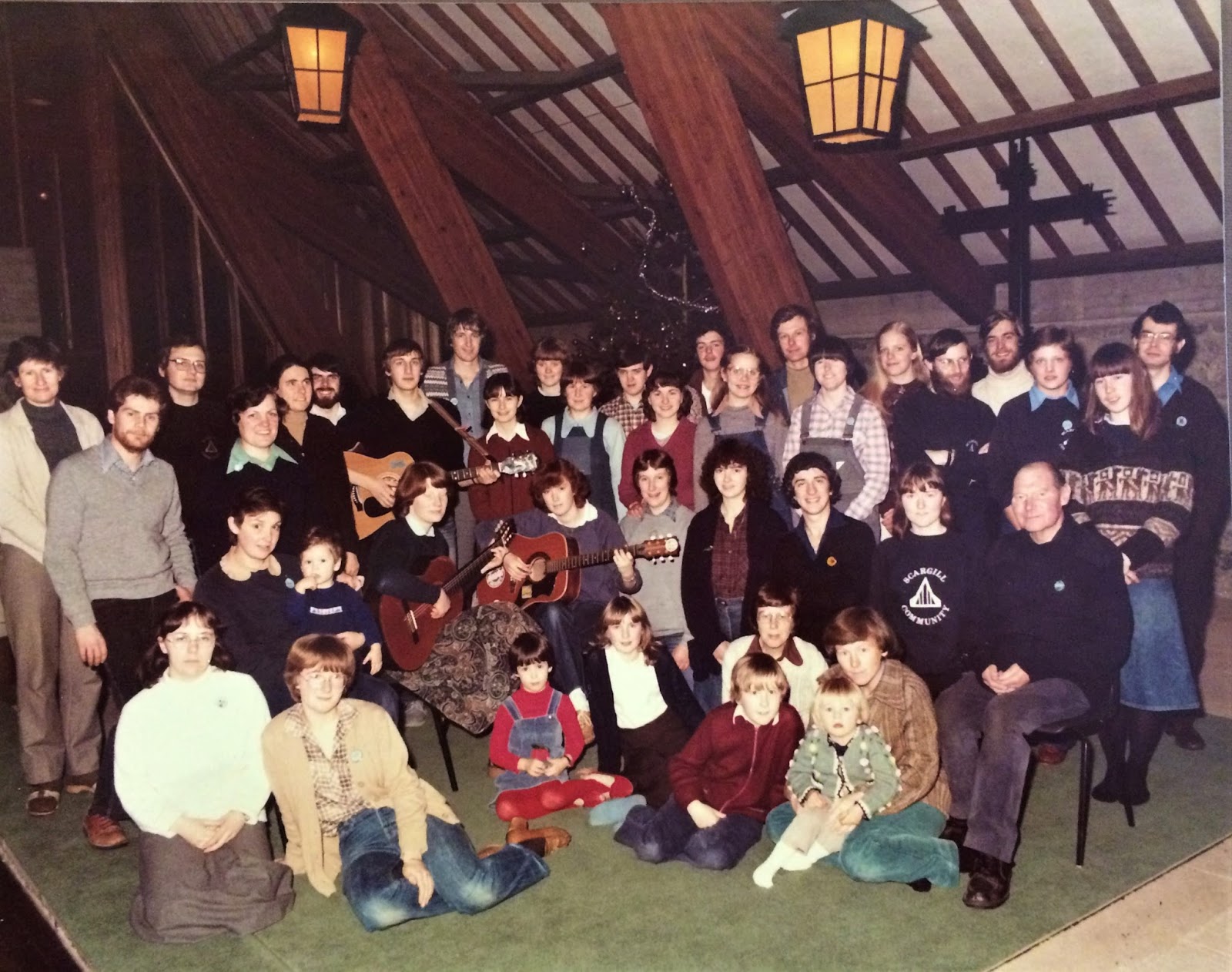
Then came the question of what to do with the time I would have off between the Oxbridge exams in November and starting university the following Autumn (wherever that might be).  During childhood, another place we had visited often was Scargill House in the Yorkshire Dales.  Set in the picturesque landscape of Upper Warfdale, Scargill was a Christian community of about 30 people who ran a conference, holiday, and retreat centre for about 90 guests.


 For most people the words ‘Christian community’ bring visions of pious looking monks or nuns in religious habits, but Scargill was nothing like that.  Most of the community at Scargill were in their 20’s and wore jeans not habits.  When a member of the community was invited onto local radio to try to explain what it was like to live in community, he began by saying, “We do everything together; we work together, we eat together, we...” and everyone wondered what he was going to say next!  Thankfully he finished the sentence with “We pray together.”  This religious community was predominantly a group of young people who chose to live there for a time to find out more about themselves and deepen their faith, joining for anything from a few months to a several years.

Scargill Community 1982

 We certainly worked together and looking after the guests involved cooking, cleaning, as well as managing the 96-acre estate under the leadership of a Chaplaincy Team.  We also took turns to be on the Guest Team, leading whatever conference, retreat or holiday was on the programme for that week.  This involved making everyone feel at home, leading worship, drama or meditations, and accompanying our guests on walks around the Dales.

Scargill has the most beautiful modern chapel which somehow set the ethos for the whole place.  It is in the shape of praying hands under a huge wood shingle roof.  We sat around the altar on its large stone dais which doubled as a place to kneel for communion or as a stage for drama or dance.  Each end of the chapel was completely glazed in clear glass, revealing the beauty of God’s creation with views of across the dale or up into the forest behind.  Every morning we would meet there for prayers after an early breakfast.  It set the scene for the day.


I applied with excitement and got an interview.  It was the week after Easter and I borrowed my parents’ motor caravan to drive up in.  As I set off from Bolton it started to snow.  By the time I reached the Yorkshire Dales it was a blizzard.  The last 15 miles from Skipton to Kettlewell were going to be a real challenge, and one which proved too much.  I finally gave up when the snow plough I was following stopped because the snow drifts were too deep.  Returning to Skipton, I phoned Scargill in bitter disappointment, only to be told, “Don’t worry, we’ll pick you up!”

Sure enough, about 40 minutes later a land rover arrived driven by a member of the community who was an ex-royal marine commando.  I quickly learned that his strategy for snow drifts was simple; the bigger the drift, the faster you drive at it!  We arrived in one piece just in time to find that the power had gone out and there were 70 guests to look after.  It was an eventful weekend with the snow 2-3 feet deep in places.  After managing on emergency power overnight, the electricity came back on in the early hours of the morning and I spent most of the weekend in a team shovelling snow from the long driveway to make sure our guests could leave.

So it was that I was offered a place on the community and immediately after my Oxbridge exams, I left home on a new adventure.

Of course, nothing is ever what you expect it to be.  For me, the most important lesson of going to Scargill was to begin at the bottom again.  I left my church in Bolton and the youth group where everybody knew me and often looked to me for advice and leadership.  I arrived at Scargill where nobody knew me, and I didn’t know them.  The first week was spent washing up.  The second week, I was moved to House Team who cleaned the house from top to bottom every day.  Any romantic notions of the joys of living in community are quickly dashed when you are sent off to clean the 30 or so toilets around the house before 11am!  Then there was changeover day, when one group of guests left and another group arrived.  Every bed in 50 rooms needed changing, before cleaning and setting up just right for the new arrivals.  It was hard work and there was a ‘Scargill way’ of doing everything, from folding the sheets to arranging the furniture in the large meeting rooms.

Looking back, I learned there what it really means to serve people in Christian ministry.  Not up the front with everyone looking at you, like being a priest at the front of a church, but in the simple unseen acts of service which no one notices, except if they are not done – like cleaning toilets.  It was a good lesson for me to learn.

A few weeks after I arrived at Scargill, I had to go to Oxford for interview.  It was another cold and snowy few days, trudging through the snow from college to college for interviews.  When I looked at the other candidates I didn’t think I stood a chance.  There were only 6 places for Maths at Brasenose and there were 12 of us there.  All of them appeared to be much smarter than me.  At one interview, after we had talked about maths for a while, I remember being asked about my application.

He showed me two consecutive lines on the application form.  The first asked for my chosen subject – mathematics. The second asked what career I wanted to follow, and I had written “Priest in the Church of England”.  He looked puzzled and said, “So you don’t want to do anything with your maths after you finish then” quickly followed up by “So why do you want to study maths?”

I remember saying that I enjoyed maths and didn’t want to be the kind of vicar who didn’t know about anything apart from theology.  He smiled.

Looking back, I am sure that this question got me a place at Brasenose.  It was the only thing which set me apart from other applicants, the only thing which would have been memorable when the time came to choose who to offer a place to.  I think it was just after Christmas that I got the letter inviting me to Brasenose College Oxford.  It took me a while to really believe it.

The time at Scargill passed all too quickly.  As I got used to the work there it became more and more fun.  I shared rooms with Simon who was mad about pot-holing and climbing, even taking me down the wet and slippery Providence Pot on one occasion.    As a community we welcomed everyone from Bishops to borstal boys.  Music, art and drama were a normal part of our weekly activities alongside cleaning the house, day in, day out. I even got used to the ‘Scargill way’ of doing things.

During one summer house-party when I was on the Guest Team, we organised a cross between ‘It’s a Knockout’ and a commando course around the estate complete with being drenched by fire hoses and a zip-wire ride!  Everyone had to complete the course in pairs and it started with a three-legged race, tied up with strips of old pillowcases.  “Keep hold of the pillowcases when you untie your legs” I said, “You may need them to staunch the blood later!” - trying to add to the excitement.  Imagine my face then the guest speaker for the week arrived at the finish line needing several stitches with blood dripping from the old pillow case wrapped around his arm!

I did start to think that Scargill would be the place I would end up, but then some of my youth group from Bolton came to visit and said “No – you need to be out in the world.”  So in September 1982, I left for Oxford with something of a heavy heart.  It was like finding somewhere you felt you belonged, but then knowing you have to move on.


Scargill became somewhere I went back to many times.  The chapel there became the place where I would return when I really needed to hear from God.  In the stillness, enveloped in those praying hands, surrounded by the beauty and majesty of creation, I always knew I would meet God there. 

It is some years now since I last went back, but I hope to visit again soon. 

You never know, perhaps I will hear something new?


Sunday, 28 January 2018

First steps

Crossing the Line - part 13


It’s all very well hearing the call – but what do you do then?  Especially when you are 16 years old and still at school.

There was a lunch-time Christian group at school, but I had steered clear of it until now.  For a start, it didn’t have a very inspiring name.  Most schools and colleges had Christian Unions or Fellowships – we had the Christian Education Movement.  Usually this was abbreviated to CEM which was even less appealing.  It seemed like a name designed to put people off giving up their lunchtime.  It was certainly sterile enough for the secular agenda of the school.  It was safe.

In fact, I was only just old enough to go. 

My school was divided into a Boys Division and a Girls Division.  The two operated as two separate schools, a mirror image of each other in gender, ethos and architecture.  The buildings spread out along Chorley New Road in almost perfect symmetry, either side of a central arch.  On the right were the boys, on the left were the girls, with everything designed to ensure that the two should not meet.  Separate play grounds and sports fields, separate bus stops and separate Great Halls for assemblies, staring at each other across this central no-man’s land.  The Boys Division didn’t want the distraction of girls interrupting the finely tuned exam factory.  The Girls Division didn’t want those annoying boys getting in the way of producing ambitious young ladies.  When I started going out with Lesley from the Girls Division, it was mentioned at her next parents evening as something undesirable for a young lady studying hard.  There was almost no opportunity before 6th Form for boys and girls to meet together yet somehow we had circumvented this prohibition by living in the same village.

Girls Division on the left - Boys on the right
In spite of this division, the Christian Education Movement was a mixed society of both boys and girls, so no-one below the age of 16 was allowed to go.  I had turned 16 a couple of months before my ‘Gotcha’ moment but trying out CEM was something I was still keen to avoid.

I think it was Lesley who got me there one Thursday lunchtime.  She had a close friend who went, and one day she suggested that I should go - and that she would go too.  The CEM met in the Tower Room just above the central arch which divided the schools.  It was the only room in the entire school which had doors that led directly to both the Boys and Girls Divisions.  It felt a little like entering a diplomatic neutral zone – a gendered DMZ between two opposing worlds.

When I got there, about 8 people were holding a Bible study and I saw a group of dispirited boys and girls with heads down listening to someone holding forth about his own views to the exclusion of everyone else.  It was just as I had feared.  On the way there, I had decided not to say anything at the meeting, keep a low profile and drift away at the end; but listening to this monologue dominating the proceedings and getting more and more aggressive, awakened something in me.  I tried to keep quiet, but the more I saw how everyone else had been cowed into submission, the less I was able to remain quiet.  Eventually I snapped.  I opened my mouth and out came something like, “Oh come off it!”  I can’t remember if those were my exact words, but they certainly express the sentiment of what I said.  Everyone looked up in shock. 

At the end of the meeting, the leader announced that they needed to elect a new member to the committee which organised CEM.  Before I knew what wat happening, and without offering, I had been elected.   “So much for keeping a low profile” summed up my thoughts as I went to afternoon classes.

Over the months which followed, we changed the whole feel of CEM.  Argumentative debates went out.  In came more prayer, music and fellowship.   Before I knew it, I was leading the committee, and we were booking more local ministers and preachers as visiting speakers.

Over the two years which followed, more and more people came.  We went from single figures to forty or fifty people on a good day with an exciting speaker or worship leader.  We got permission to start an early-morning prayer meeting each week, with about a dozen of us gathering at 8:15am to pray together for half an hour before school started. 

Who was the only one wearing sunglasses
for the school photo?
When churches in Bolton came together to organise a town-wide mission, I got permission to bring a Christian rock band into the Boys Division for a lunchtime concert in the theatre.  We could have filled the theatre twice over with those trying to get in, and I was invited by the headmaster to speak at the whole school assembly about the mission.  I told the story of meeting a drug addict at the mission meeting in the Town Hall the night before, and how he wanted to change, but didn’t think he could.  Perhaps we are all like that before God, I suggested to 800 of my peers.

It would be wrong of course, to suppose that this was all my doing.  We worked as a team.  God brought people to us.  Then they introduced their friends, and before we knew it, it was unusual to have less than 20 teenagers meeting together in this very secular school.  We met for prayer and reading the Bible together, for worship and for fellowship.

Alongside this, my father had changed parishes, and we had moved from the village at Blackrod into Bolton, close to the school.  There was no youth club or fellowship at the church, and before long I invited the handful of other teenagers to my room in the Vicarage for a kind of Youth Fellowship.  I had no idea what I was doing or supposed to do, but saw the need.  We prayed and read the Bible together and for many months it stayed at about 6 of us, (some under pressure from their parents) and nothing seemed to be happening.

Then I sensed God prompting me to talk about being Baptised in the Holy Spirit, sharing my story and how God had changed my life.  It started to strike a chord and others began to come.  Some were from the Christian Education Movement at Bolton School, but more were from other local schools.  David and Catherine from Smithills School came and started to bring others.  David was very gifted on the guitar, and a natural salesman.  Catherine was the quiet and highly practical person that every group needs to flourish.  Then Neil came and introduced us to 100% Proof – not a whisky but a Christian Heavy Rock Band with a sound like AC/DC!  We started taking other people to their concerts around Manchester and as they shared their Christian faith without compromise, others saw that you could be a Christian without being a wimp! There were others too like Janet, Tim, Robin and Douglas – too many to mention.  We all grew in faith and learned to encourage others in theirs.

100% Proof in Concert
In time,  St Margaret’s Youth Group grew out of my room into the Vicarage dining Room.  Then it out-grew the dining room and took over the living room.  When finally we could not squeeze anyone else into the Vicarage, it had to move to the new Church Hall and continued to grow, with David leading after I left home for a gap year before university.

St Margaret’s Church was in a fairly ordinary part of Bolton surrounded by traditional streets of terraced housing and the old cotton mills for which Lancashire was once famous, now empty and silent.  The church had a problem with vandalism.  It had huge windows at the back made up of thousands of squares of glass held together in a lead lattice.  One of the jobs over the weekend was to sweep up the broken glass from the stones which had been thrown to break them.  One weekend my dad counted over 100 broken panes of glass in the church.  It was just too tempting for kids with nothing to do.

So what could we do about it?  That was the question.  The Youth Group started to organise “St Maggie’s Discos” for teenagers, in the Church Hall (it was the end of the 70’s when discos were still cool).  At the first one, about 50 turned up.  By the 3rd or 4th, we were turning people away because we had already filled the hall with around 300 young people.

The discos were never problem free and we couldn’t have done it without the stalwart support of some of the men in the church who controlled the door and provided back-up if anything started to get out of hand.  One night when we were preparing for a disco, a phone-call came from the police.  They had received a tip-off saying that a knife fight was being planned between two local gangs, at our disco.  Cancelling was not an option.  The idea of having 300+ young people in the street outside the church with nowhere to go was not a good plan.  When they were inside, we could ensure there was no alcohol, but outside, they would have been knocking back the Tenants Extra or Strongbow unabated.

We decided to go ahead, with two plain clothed CID officers in the Church Hall and 2 police riot vans parked up a couple of streets away.  Soon after the disco started, David and I found out which gangs were planning to fight, and got their leaders together.  We said to them, “If you do this, this will be the last St Maggie’s Disco ever.  Everyone will suffer.”  To our amazement, they gave us their word that there would be no fighting at the disco that night.  We learned later that they adjourned to a local park after the disco to settle their scores after the disco had finished, but they respected what we were offering to teenagers with nothing to do, and they didn’t want to be the ones who put an end to it.

Alongside this, the vandalism on the church dropped to zero without the church ever having to get anyone arrested or charged or taken to court.

Some of St Margaret's Youth Group on a Good Friday Walk
We also found that some of the disaffected young people who came to the discos also started to come to church and the Youth Group.  Side by side, posh pupils from Bolton School and teenagers with drink problems and criminal records were praying and worshipping together.  We even had one teenage girl whose Saturday job was as a prostitute until she gave her life to Christ in the Youth Group.

Reflecting on those first steps in ministry, I am amazed by two things.

First was the trust which was placed in us by my dad and our local church.  We were left to run the Youth Group ourselves without interference.  We planned the worship, led the Bible studies, wrote the talks, prayed and ministered to each other and those in need.  We saw God heal broken hearts and soften hardened hearts as we prayed, without the need to call a grown-up in to do the 'important stuff'.  While recognising the need for good safeguarding in youth work, I wonder if we now tend to professionalise it too much, rather than letting young people reach young people.

Second is how God honoured everything that we did.  As I look back to that time, I can’t believe how much I crammed in.  I was doing my A-levels, working a part time job, was in a 3-year committed relationship with my girlfriend and leading a youth ministry the size of most churches.  By rights, it should have all collapsed in a heap at some point, and yet it didn’t.  I even finished my A-levels with four grade A’s – something I couldn’t have even imagined a few years earlier.  God honoured the commitment which had been required of me and I was not alone.  The other leaders all went on to college and university. 

Neil, Benny and Tim drawing attention
to themselves at Greenbelt
I guess both of these things come back to trust.  Trust in the God who calls us, and trust in one another.  I wonder how much we miss out on because of our reluctance to do either.  I remember an former bishop of Southwark Cathedral advising his clergy to experiment; to see what would work and what wouldn’t in their parishes.  Experiment, experiment and then experiment some more.  He recognised that some of these experiments would go wrong but then we pick ourselves up and learn from them.  The other option is always playing it safe, repeating the things which have worked in the past until they finally bury themselves.  For young people in particular, this is simply not an option in a fast changing society.

Over the past few years, I have had the privilege of being in touch with a good number of people from St Maggie’s Youth Group, and I am constantly delighted and amazed by the way so many have carried on with their Christian faith.  Some are even worship leaders, pastors and vicars.  All through the trust which was placed in us by the church in our teenage years. 


It is perhaps worth remembering that the greatest calling of all time was entrusted to a teenage girl in a village in the middle of nowhere.  Perhaps the church should be looking for more teenagers to invest with trust?


Sunday, 31 December 2017

Finding me

Crossing the Line - part 9


Bolton School took quite a bit of getting used to.

Compared with the church school in Blackrod, it was a different world.

I had never had to wear a school uniform and never carried a bag to school.  Now there I was on my first day in my grey trousers, black shoes, white shirt and school tie, with a blue blazer, gabardine raincoat and school cap, carrying a briefcase, gym kit and games bag.

We each had our own desk to keep our books in.  We sat in neat rows and each boy was assigned his own non-negotiable place in the class room.  No sitting with your friends here.

A school ‘Sergeant’ kept order in the corridors and bellowed with a drill sergeant’s voice if someone dared to run in school or disobeyed the strict one-way system on the stairs.  He was also the person who looked after you if you were ill or injured at games, revealing a caring compassionate side which was equally shocking the first time anyone encountered it!

Lunch was taken in a huge hall seating 450 pupils, seated at regimented tables of 11 with a teacher or monitor (prefect) at the head, keeping discipline.  Food came out to each table in serving dishes with 11 plates and was served by those at the head of the table to everyone else.  It was almost always meat or pies and 2 veg, with the occasional adventurous curry. Pudding was almost always hot; spotted dick or treacle tart with custard, or on bad days semolina or rice pudding.  There was never a choice and you had to eat everything before your empty place was passed back up the table to be cleared away.  More challenging was that the whole sitting had to be finished in 20 minutes, from arrival in the hall, through grace, two courses, clearing away, to the hall being empty again.  This was to allow time to reset everything for the second sitting of the older half of the school who repeated the same routine.  This left a lasting legacy in my life – the complete inability to eat slowly, even now, decades later.

Teachers often wore black teaching gowns.  Registration was in the style of Rowan Atkinson’s immortal sketch.  Discipline was strict and I remember coming home at the end of my first day and telling my parents with astonishment how quiet it had been.  I wasn’t used to silence in class.  I had also never had homework before, and remember sitting down at home with my first English homework thinking ‘what do I do now?’

For me, at nine years old, the whole effect was almost on a par with Harry Potter arriving in Hogwarts for the first time.

The ethos of the school was also determinedly secular.  We had assemblies with prayers, but it was done with a definite sense of “let’s get this over with”.  RE was relegated to the statutory minimum in the timetable and seen as an outdated irrelevance by all but one or two teachers.  The school was dedicated to achievement, competition and success.  Our termly school reports gave every pupil an exact statement of where they were in the pecking order by revealing not just a grade but also your mark as a percentage and your position in class.   This ranking system applied to every academic subject except RE where writing anything down or marking our participation was seen as superfluous.

I went straight in at 28th out of 28 in all the main subjects and stayed there for several years.  After being top of the class at the village school in Blackrod this was a bit of a shock and left me more than a little bewildered.  In the village school, I didn’t have to try to be at the top of the class.  Now I couldn’t get off the bottom, no matter how hard I tried!

To progress to the senior school at 11, we all had to pass another competitive exam with over 600 applicants for 128 places each year.  Boys at the Prep School were expected to sail through without any difficulty but a few months before the exam, my parents were called in to the see the headmaster.  It was not because I had been naughty but because the school didn’t expect me to pass.

Looking back, I think this was the wake-up call I needed.  It snapped me out of the state of shock I had been living in.  If I didn’t up my game now, I would be out.  Over the next few months, mum coached me in English and dad in Maths, and on the day of my 11th birthday, I sat the 2½ hour exam, determined to give it my best shot. I then waited to be called in for an interview, often used to sift the borderline applicants and when no invitation came, I was convinced I had failed.

So it was a huge surprise when some weeks later the letter arrived, offering me a place at the senior school.  I didn’t know how but I had made it.

My reasons for wanting to stay there were not about academic aspiration.  They were more to do with identity. At Bolton School I wasn’t the vicar’s kid, just another pupil.  The expectations on me were the same as on every other boy at the school, not tailor made with unspoken moral requirements or religious overtones.  No-none put me on a pedestal or eagerly awaited my fall from it.  I had begun to learn who I was, rather than inhabiting a persona which had been created for me, and I didn’t want to go back.

Although I started there a year later than my classmates, I had begun to make friends who simply knew me as “Hazlehurst” (first names were almost never used) and I began to discover who I was and who I wanted to be.  I also toughened up.  Although I was never good at sport, the school’s rigorous expectations around football, rugby and cricket meant that I couldn’t retreat to the side-lines, away from the action.  I remember going back to visit the village school in Blackrod after a couple of terms and joining in a game of playground football with such vigour that they called me ‘Battling Ben’ by the end.

I had discovered a new me, or rather, I was discovering who ‘me’ was.  I didn’t want anything to drag me back into a school environment where others thought they knew who I was.  If I had failed the entrance exam, I would have received a good education at my local secondary school.  My best friend Chris went there and went on to read Law at university.  My desire to stay at Bolton School was deeper than that.

I needed to be free to find myself.


Saturday, 25 November 2017

To Rome... and back

Crossing the Line - Part 5


I was three months old when my parents left their home, job and ministry, taking their baby with them into an uncertain future.  They left without telling anyone in the parish, leading to a headline in the local paper, “Vicar disappears with wife and baby!”

What prompted this rash action will seem almost incomprehensible to most people today but in 1963, for conservative Anglo-Catholics, it was an issue on a par with women priests and bishops more recently.

What was the issue?  Methodists!

In 1963 the Church of England and the Methodist Church appeared to be nearing agreement to come together and be united as one church.  While for many this was a cause for joy, the idea struck horror and fear into the hearts of those whose identity lay in seeing the Church of England as the true ‘Catholic’ Church of England.  For them it was not politics or the Reformation which defined the Church of England.  Rather, it was its Catholic heritage with orders of ministry handed down by Apostolic Succession.  After all, Henry VIII’s faith was thoroughly Catholic.  His treatise “Defence of the Seven Sacraments” in 1521 against Martin Luther, earned Henry the title Defender of the Faith, bestowed on him by Pope Leo X.  Whatever his political and marital motives, Henry was no Protestant!

Unity with the Methodists would put the Catholicity of the Church of England in jeopardy.  In England, Methodists had no Bishops and their theology was methodically reformed in its nature.  There was no Apostolic Succession and they had ministers, not priests.

For my parents, this would be the end of the Church of England as they knew it.

My father wrote to his Bishop to announce his resignation and intention to convert to Roman Catholicism.  The Bishop’s reply was polite but to the point – if you are going, go quickly.  I have the letter, and it almost reads like Jesus’ words to Judas at the last supper (John 13:27).

So that is exactly what he did.  Together they left without a word.  They took nothing with them except a baby and a couple of suitcases.  They stepped out into the unknown.

Fortunately, the Roman Catholic Converts Aid Society had a plan.  They offered us a room in Top Meadow, a house in Beaconsfield left to the Roman Catholic Church by author GK Chesterton in his will.  He was after all, a convert to Roman Catholicism himself.

There were others at Top Meadow too, beginning a new life having ‘gone to Rome’.  It was a kind of safe-house for defecting Anglican clergy.  While there, we were all baptised again (at the time The Roman Catholic church didn’t accept any other church’s baptism as valid) and my parents were confirmed.  In more mischievous moments, I have teased my Baptist and Pentecostal friends by telling them I have been baptised twice.  They would invariably nod with approval, assuming that I mean once as a baby and again as an adult when I was old enough to do it properly.  I usually wait a moment before spoiling it by saying that both were as a baby and one was as a Roman Catholic!

After a few months there, the Converts Aid Society found David a job as a Maths teacher in a Roman Catholic school in Kirkby, Liverpool.  David could not be a RC priest, of course, with wife and baby in tow.  We moved into Kirkby and settled into our new life.

I’m not sure when it began to dawn on David and Irene that this wasn’t the promised land they hoped for.  I think they had high hopes in joining the ‘mother-church’ and finally being able to be as Catholic as they pleased.  Now they were there, perhaps it wasn’t everything they had envisaged.

In any case after a year in Kirkby, David decided to find his own job as a teacher.  He was offered a job in a local authority school in Rochdale.  We moved to Hollingworth Lake on the edge of the Pennines and David started work at his new school, only to find that the Head Teacher and the Deputy Head were both Methodist lay preachers! 

Whoever said that God doesn’t have a sense of humour?

Over the next two years, they had a profound effect on David’s life and attitudes. Having ‘jumped ship’ and left his church, his vocation, and his ministry on account of Methodists, he could have simply jumped ship again and found another school to teach in.  Maths teachers were in demand, but something made him stay.

During his time at that school David came to the conclusion that they were two of the finest Christians he had ever met.  Their pastoral care and dedication to all the children in that school, from the most able to the most troubled, made a deep and lasting impression on him.  He began to see that there were more important issues than Apostolic Succession or Church labels.

For Irene, it had not been an easy transition either.  She went from vicar’s wife in the CofE to an oddity in the Roman Catholic Church and no-one knew how to treat her.  A former nun, married to an ex-Anglican priest with a baby!

I don’t think I helped either.  Mum told me of one occasion at Mass when I was about three years old;  I fell asleep during the sermon and started singing in my sleep.  Unable to wake me, she ended up walking out of the church with me in her arms, still singing the Flanders and Swann song Mud, Mud Glorious Mud at the top of my voice!

By 1966, David knew what he had to do.  He went back to the Bishop who ordained him and said, “I’m sorry. I was wrong.  Can I come back?”  Graciously, the answer was yes, albeit with a challenging first appointment to test his resolve.

From that moment onwards, David and Irene were committed to a very different form of Christianity.  Their theology had not changed.  They were still Anglo-Catholics, steeped in sacramental faith.  They still went to Walsingham each year.  They continued as Oblates at the convent in Wantage but from then on, they refused to be sectarian Christians and were always open to expressions of Christian faith different to their own.   The most important thing was recognising Christ in others, whatever our disagreements might be.

That is the Christian home where I grew up from the age of 3½ and these values have become a deep and intrinsic part of who I am.  At times they have been tested by the intransigence and prejudice of other Christians, but the roots run deep and were forged in the fire of those difficult years in my parent’s lives.

I experience a variety of feelings about their decisions in my early years.  Although my memories of that time range from sketchy to non-existent, I had 6 homes in my first 4 years of life.  We were constantly on the move, not knowing what would come next. 

I admire them for their courage to act on principle, even if they later regretted it.  Faced with similar dilemmas, many people just stay and grumble. This usually results in their impotent moaning sapping life from those around them and provides no opportunity to be challenged or changed.

I admire them even more for being willing to change when they realised they had been wrong - for being willing to admit it and say sorry.

Crossing the line doesn’t always lead us in the right direction, but when we do it in good faith it gives God the opportunity to do something in our lives and bring us to where he wants us to be.

Perhaps we may all need to be more like that sometimes?